When Concrete Repair Needs More Than Patching

A hairline crack across a driveway may be cosmetic. A widening crack at a foundation wall, a sunken garage slab, or water tracking along the edge of a patio is different. Effective concrete repair starts by determining why the concrete changed - not by covering the visible damage and hoping it stays put.
For property owners and project teams in Vernon, the North Okanagan, and the Shuswap, that distinction matters. Freeze-thaw cycles, sloped sites, seasonal water, expansive soils, and heavy vehicle loads can all affect concrete performance. A repair that addresses only the surface may look acceptable for a season while water and movement continue below it.
Concrete Repair Begins With the Cause
Concrete is durable, but it is not immune to movement, moisture, poor drainage, impact, or loading beyond its design. Cracks and settlement are symptoms. The right repair scope depends on whether the problem is isolated to the finish, caused by water at the site, or connected to foundation integrity and structural support.
A contractor should first look at the concrete’s age, crack pattern, elevation changes, drainage paths, nearby downspouts, soil conditions, and how the area is used. A driveway that carries passenger vehicles has different requirements than a commercial slab exposed to equipment. Likewise, a retaining or foundation wall on a hillside demands a different level of assessment than a small crack in a garden walkway.
Repairing without this assessment can create a false sense of security. Sealant may keep debris out of a crack, but it cannot correct a slab that is continuing to settle. A fresh topping may improve appearance, but it will not solve water pressure building against a foundation wall.
Know the Difference Between Cosmetic and Structural Cracks
Not every crack needs structural intervention, but every crack deserves an informed look. Hairline shrinkage cracks often develop as concrete cures and may not affect performance. They can usually be sealed if appearance or water entry is a concern.
Cracks that are wider, uneven from one side to the other, growing over time, or accompanied by displacement require more attention. These conditions can indicate settlement, frost movement, inadequate base preparation, drainage failure, or loading issues. In foundations and structural walls, horizontal cracks, stair-step cracking in adjacent masonry, bowing, or recurring water entry should be treated as priority concerns.
The location also matters. A crack in a patio may be manageable if the slab remains stable and drainage is correct. A crack at a garage slab edge, footing, retaining wall, or foundation opening can affect how loads transfer through the structure. The goal is not to overreact to every imperfection. It is to recognize when the repair must protect the building, site, and people using it.
Signs a repair should not wait
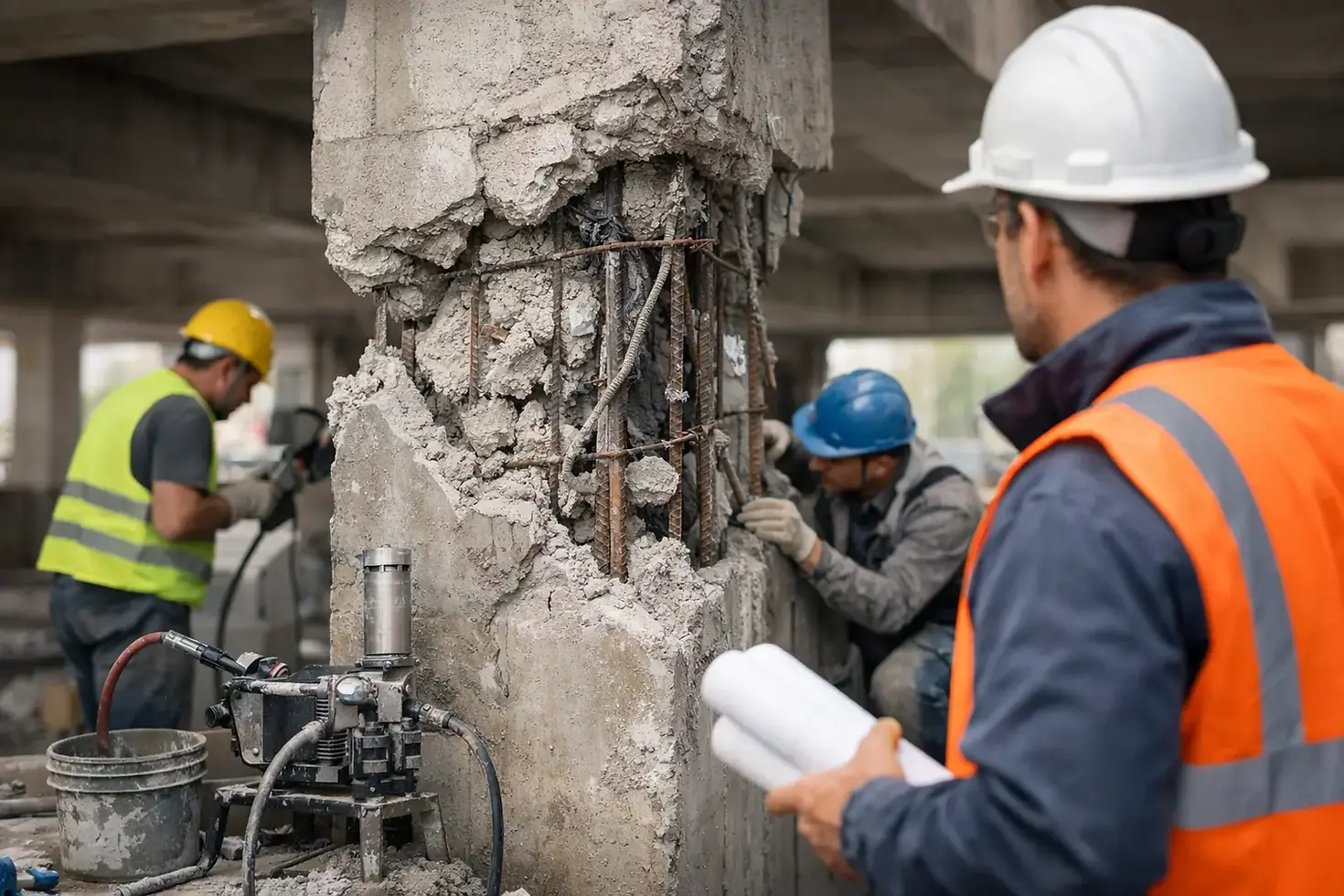
Concrete should be assessed promptly when it is actively moving, creating a trip hazard, allowing water into a building, exposing reinforcing steel, or breaking down around structural edges. Spalling - where the surface flakes or breaks away - can also accelerate once moisture reaches embedded steel. As steel corrodes, it expands and can force more concrete off the surface.
Standing water is another warning sign. Water that pools against a garage, foundation, stair landing, or retaining structure is rarely just a surface inconvenience. Over time, it can soften supporting soils, increase freeze-thaw damage, and place avoidable pressure on concrete assemblies.
Match the Repair Method to the Damage
There is no single product or patch that works for every repair. The correct method should be selected after the concrete and the site have been evaluated.
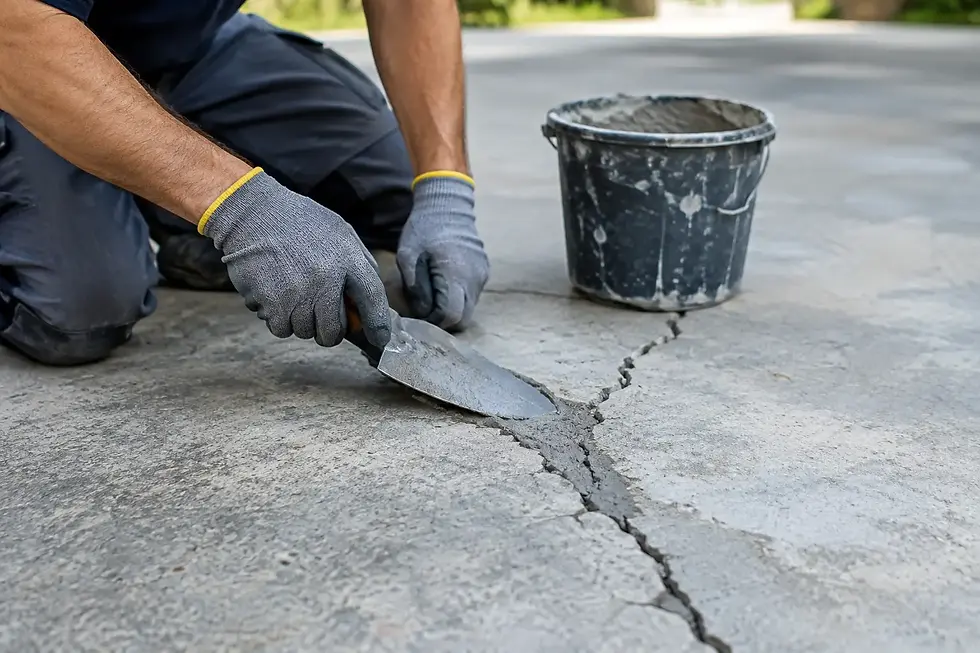
For stable, non-structural cracks, routing and sealing can reduce water entry and help preserve the slab. For localized surface damage, deteriorated material may be removed to sound concrete before a compatible repair mortar is placed. Proper surface preparation is critical here. New material needs a clean, solid, properly profiled surface to bond and perform.
Where slabs have settled but remain otherwise sound, lifting techniques may be considered. Whether lifting is appropriate depends on the slab’s condition, the supporting soil, access, load requirements, and the cause of settlement. If water has washed out material beneath the slab or a drainage issue remains unresolved, lifting alone may not be a long-term answer.
Severely damaged slabs, failed driveways, compromised stairs, or concrete with extensive movement may be better removed and replaced. Replacement costs more upfront than a superficial patch, but it creates an opportunity to correct base preparation, reinforcement, slope, joint layout, and drainage. On high-use or structurally sensitive areas, this is often the more responsible long-term decision.
Drainage Is Often Part of the Repair
Concrete repairs frequently fail because water management was left out of the scope. A sound repair plan considers where surface water goes, where roof runoff discharges, and whether water can build up below or behind the concrete.
On residential properties, this may involve correcting the slope of a replacement slab, extending roof drainage away from the foundation, adding a swale, or installing a drainage system suited to the site. On sloped properties, water needs a managed route that does not erode soil beneath a driveway, patio, stair system, or foundation.
For retaining structures and foundation walls, drainage design becomes even more important. Free-draining backfill, properly placed drain tile, filter fabric where appropriate, and a reliable outlet can reduce hydrostatic pressure. These details are not decorative extras. They protect structural forming work and help preserve the wall’s intended performance.
A Good Repair Scope Is Clear Before Work Starts
Concrete work can affect access, landscaping, vehicles, exterior finishes, and day-to-day use of a property. Clear planning helps protect both the schedule and the finished result.
Before repairs begin, the scope should identify the damaged areas, the proposed repair method, any demolition required, base or drainage corrections, reinforcement requirements, finishing expectations, and curing considerations. It should also address practical questions: Will access be limited? Can vehicles use the area during the work? What landscaping or adjacent surfaces need protection? How will water be managed while the area is open?
For builders and general contractors, the same discipline supports coordination with excavation, framing, waterproofing, utilities, and landscaping trades. Concrete repairs are often part of a larger site issue, particularly on hillside builds or projects with complex exterior assemblies. A repair crew that communicates early can prevent a small concrete deficiency from becoming a scheduling conflict across the project.
Rize Construction approaches this work with the same attention used for structural foundations and custom exterior concrete: define the condition, confirm the scope, and complete the work with durable materials and accountable site management.
What Quality Work Looks Like After the Crew Leaves
A concrete repair should not be judged only on the day it is finished. Fresh concrete and patch materials can look good initially even when preparation, drainage, or curing was inadequate. Long-term performance depends on the work completed before the final finish is applied.
Look for clean removal of unsound concrete, properly prepared edges, stable support beneath slabs, suitable reinforcement where required, and deliberate control joints in replacement work. Finished surfaces should drain as intended without directing water toward the structure. Transitions at doors, garage thresholds, steps, and existing concrete should be planned to avoid awkward elevation changes or water traps.
Curing also deserves respect. Concrete gains strength over time, and early exposure to heavy traffic, extreme temperature swings, or rapid moisture loss can affect durability. The contractor should provide practical direction on when the repaired area can be walked on, driven on, sealed, or returned to service.
Protect Repaired Concrete From Repeat Damage
Once the repair is complete, regular attention can extend the service life of concrete. Keep drains and gutters clear, prevent concentrated roof runoff from discharging beside slabs, and watch for changes in slope or new pooling water. Remove de-icing salts and harsh chemicals when possible, especially from garage floors and exterior stairs exposed to winter conditions.
Sealing may be worthwhile for certain exterior surfaces, but it is not a substitute for correct installation or drainage. The best maintenance plan depends on the concrete exposure, finish, traffic, and local conditions. A driveway, decorative patio, and structural stair assembly should not automatically receive the same treatment.
When concrete begins to crack, settle, or retain water, acting early usually gives you more repair options and better control over cost. The most useful next step is a site-specific assessment that treats the visible damage as evidence, then fixes the conditions that caused it.

Comments