
How to Choose a Concrete Foundation Contractor

A foundation is not the place to accept vague allowances, rushed excavation, or a crew that treats drainage as an afterthought. The concrete foundation contractor you choose sets the standard for how the entire structure performs - from the first wall layout to the way water moves around the building years later. For homeowners, builders, and project teams in the North Okanagan and Shuswap, the right partner brings order to one of the most consequential stages of construction.
Foundation work often disappears from view once framing, finishes, and landscaping are complete. That does not make it less visible in the long run. Settlement, water intrusion, cracking, uneven floors, and failed exterior drainage can all trace back to decisions made before the first concrete truck arrived. A properly planned foundation protects the investment above it.
What a Concrete Foundation Contractor Should Manage
A capable concrete foundation contractor does more than place concrete. The work begins with understanding the site, the structural drawings, access constraints, elevations, soil conditions, and the relationship between the foundation, drainage, and future exterior grades.
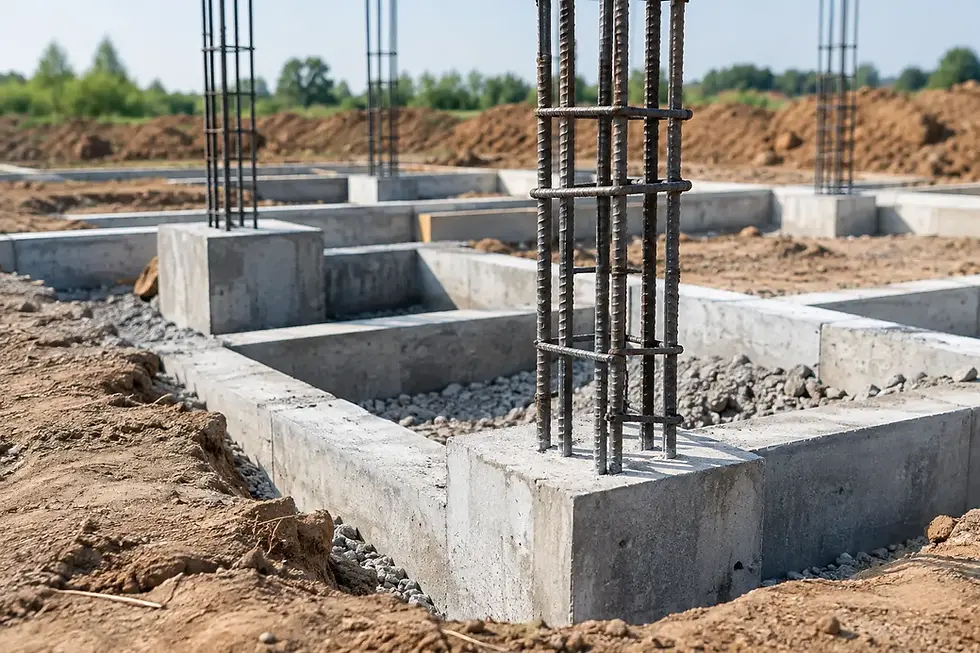
For a straightforward garage or addition, that may involve excavation coordination, footings, foundation walls, slab preparation, reinforcing steel, damp-proofing, perimeter drainage, and backfill sequencing. On a custom home or hillside build, the scope can become significantly more technical. Retaining conditions, stepped footings, engineered wall heights, limited equipment access, suspended slabs, and water management may all require careful structural forming and coordination with the general contractor and engineer.
The best foundation crews think ahead. They confirm penetrations before concrete is placed, protect required clearances, plan access for the pump truck, and recognize that a drain location or wall elevation affects the trades that follow. This is where jobsite discipline saves time. Correcting a missed sleeve, improperly located drain, or out-of-level wall after the pour is expensive and disruptive.
Start With Proven Foundation Experience
Not every concrete contractor is equipped for structural foundation work. Decorative flatwork, driveways, and patios require skill, but foundations add a different level of responsibility. The contractor should be comfortable reading structural plans, building accurate forms, placing reinforcement to specification, managing concrete placement, and coordinating inspections.
Ask about projects similar to yours. If your property has a slope, ask specifically about hillside construction, stepped foundations, retaining walls, and drainage solutions. If the project is a commercial, civil, or builder-led scope, ask how the contractor manages production schedules, site logistics, safety requirements, and handoffs with other trades.
Experience matters most when conditions are not ideal. A crew that has handled tight sites, wet ground, elevation changes, and complex forming can identify risks early rather than improvising once the excavation is open. There is a trade-off here: an experienced structural contractor may not be the lowest initial quote. However, foundation work is a poor place to buy uncertainty. A clear scope and reliable execution usually cost less than a repair after framing has begun.
Look Beyond the Price on the Quote
A foundation quote should allow you to understand what is included, what is excluded, and what could change if site conditions differ from the assumptions. A single low number without details can create problems when excavation, rock removal, pumping, additional reinforcing, engineered changes, or drainage work enters the conversation.
A fixed-price contract is valuable when the scope is well defined. It gives homeowners and project managers a clearer planning number and reduces the chance of surprise charges for work that should have been included from the start. At the same time, fixed pricing does not mean a contractor can predict every underground condition. Rock, unstable soil, buried debris, or water discovered during excavation may require a documented change in scope. The key is how that change is communicated, priced, and approved.
A professional proposal should make the following areas clear:
Structural forming, footings, foundation walls, slabs, and reinforcing included in the scope
Drainage, damp-proofing, insulation, backfill, and excavation responsibilities
Concrete specifications, finishing expectations, and curing requirements
Permit, inspection, engineering, or survey coordination requirements
Assumptions that could affect price, timing, or construction approach
You do not need a contractor to promise that nothing will change. You need one who identifies likely variables before work begins and addresses them directly if they arise.
Drainage Is Part of Foundation Integrity
Concrete is durable, but it is not a substitute for water management. Foundation integrity depends on moving water away from the building, relieving hydrostatic pressure where required, and establishing grades that do not direct runoff toward walls or slabs.
This is especially relevant on hillside sites and properties with seasonal runoff, snowmelt, or heavy rainfall. A custom-engineered drainage system may include perimeter drains, drain rock, filter fabric, sump provisions, swales, retaining-wall drainage, and controlled discharge points. The right solution depends on the site plan, soil conditions, elevations, and local requirements.
Homeowners should be cautious when drainage is treated as an optional add-on. In some cases, the design may be simple. In others, drainage is central to the long-term performance of the foundation and surrounding landscape. Ask how the contractor intends to protect the walls before backfill and where water will travel once it reaches the perimeter system.
Good drainage work also requires sequencing. Perimeter drains need to be installed at the correct elevation, protected during backfill, and kept clear of sediment. Exterior grading must be completed with the finished building and landscape in mind. A foundation can be formed perfectly and still face avoidable water issues if this work is rushed.
Evaluate Communication Before Construction Starts
Most foundation projects move quickly once crews mobilize. Excavation, inspections, reinforcing, concrete delivery, and weather can all affect the schedule. That makes communication a practical construction requirement, not simply a customer-service preference.
Pay attention to how a contractor handles the estimating stage. Do they return calls, explain the scope in plain language, ask useful questions, and identify information they need before pricing? Are they willing to discuss schedule expectations honestly? These early interactions are usually a good indication of how the job will be managed once work is underway.
For homeowners, clear communication reduces the stress of having excavation equipment, concrete trucks, and crews on the property. For builders and general contractors, it supports better trade coordination and prevents delays that can affect framing, utility rough-ins, and inspections.
A dependable contractor should provide transparent updates when weather, inspection timing, material availability, or site discoveries affect the work. Problems can occur on any construction site. Professionalism is shown by bringing forward solutions quickly, documenting decisions, and keeping the project moving without hiding the issue.
Confirm Schedule Control and Site Standards
Foundation work is a critical path activity. Delays at this stage can hold up every trade that follows. While no contractor controls the weather or municipal inspection availability, an organized team can control its preparation, crew scheduling, material coordination, and readiness to pour.
Ask how the contractor plans a typical foundation sequence and what they need from you or the general contractor before mobilizing. Confirm access routes, staging areas, utility locates, approved drawings, survey information, and any site restrictions. On an occupied property, discuss how the crew will protect driveways, landscaping, neighboring areas, and daily access.
Cleanliness also matters. Concrete work is demanding, but a disciplined crew can still maintain a safe, organized site. Respect for the property includes managing washout, limiting unnecessary disturbance, securing the work area, and leaving the site in reasonable condition at the end of the day.
Choose a Partner Who Sees the Whole Build
The strongest foundation contractors understand that their work supports more than the building shell. It affects framing accuracy, moisture protection, exterior stairs, garages, patios, driveways, retaining features, and the long-term usability of the property.
Rize Construction Ltd. approaches foundation work with that wider view, combining structural concrete experience with drainage, framing, and exterior construction knowledge. That is particularly valuable when a project includes a new foundation alongside a garage addition, a sloped lot, retaining elements, or future outdoor improvements.
Before signing a contract, take the time to review the drawings together, walk the site, and ask where the contractor sees risk. The right answer is rarely a sales pitch. It is a clear explanation of the work, the sequence, the budget assumptions, and the steps that will protect your property long after the forms come down.


Comments