
Grade Soil Away From Foundations Correctly

When you grade soil away from foundations, you are directing one of the most damaging forces on a property: water. A foundation can be structurally well-built and still face unnecessary risk if rainwater, snowmelt, or irrigation repeatedly collects beside it. Proper site grading is a practical first line of defense for foundation integrity, basement and crawlspace dryness, and long-term landscape performance.
For homes across Vernon, the North Okanagan, and the Shuswap, this work deserves more attention than a quick wheelbarrow of topsoil. Freeze-thaw cycles, sloped lots, heavy spring runoff, and hard surface drainage all affect where water travels. The right solution considers the full drainage path, not just the soil directly beside the house.
Why grading soil away from foundations matters
Soil next to a foundation should shed surface water away from the building rather than hold it against the wall. When the grade slopes toward the home, water can saturate the backfill around the foundation, increase pressure on below-grade walls, and find its way through small cracks, joints, service penetrations, or aging waterproofing.
The warning signs are often visible before major damage occurs. You may see puddles along the foundation after rain, damp patches or musty odors indoors, peeling finishes near lower walls, soil erosion below downspouts, or landscaping that remains wet long after the rest of the yard has dried. These conditions do not always mean the foundation itself has failed, but they do mean water management needs attention.
Correct grading also protects the investment around the home. Patios, walks, stairs, driveways, decks, and exterior cladding all perform better when surface water has a planned route away from the structure.
Start with a site-level assessment
Before adding soil, walk the property during or shortly after a significant rainfall. Observe where water lands, where it ponds, and where it exits. Pay close attention to roof downspouts, driveway edges, patio transitions, window wells, utility penetrations, and the low points of the lot.
A problem beside the house may begin farther uphill. On a hillside property, runoff can move quickly toward a foundation from neighboring grades, retaining walls, or swales that no longer function. On a flatter lot, even a shallow depression can hold enough water to create repeated saturation beside the building.
It is also worth checking whether previous landscaping has changed the original grade. Raised garden beds, decorative rock, mulch buildup, new sod, and patio overlays can gradually bring soil or finished surfaces too high against siding and foundation details. Water then has less room to move away, while wood framing, cladding, and flashing may lose the clearance they need to dry properly.
How to grade soil away from foundations
A common residential guideline is to slope the finished ground down at least 6 inches over the first 10 feet away from the foundation. That is a useful starting point, but it is not a substitute for looking at the actual site. Property lines, retaining walls, sidewalks, driveways, and neighboring homes may limit where water can go.
The goal is a consistent positive slope. Water should leave the foundation area without being trapped by a garden border, curb, walkway, or low section of lawn. Avoid creating a steep, abrupt drop immediately beside the home. A gradual slope is easier to maintain, more stable under rain, and more practical for landscaping.
Use suitable fill where additional height is needed, then cap the area with topsoil appropriate for planting. Soil should be placed and compacted in controlled lifts when the correction is substantial. Loose fill may settle after a season of rain and snow, returning the area to a negative grade. In locations with clay-heavy soils, surface shaping becomes even more important because water can move slowly through the ground and remain against the foundation longer.
Keep the finished grade below siding, stucco termination details, vents, and other exterior components. The exact clearance depends on the building assembly and local requirements, but soil should never be piled carelessly against exterior finishes just to create slope. If there is not enough room to achieve proper grade while preserving clearance, the project may need a drainage system, a retaining solution, or adjustments to surrounding hardscapes.
Do not rely on mulch or decorative rock
Mulch and decorative stone can improve appearance, but neither fixes poor drainage. In fact, thick mulch layers can absorb and retain moisture beside the foundation, while impermeable landscape fabric can change how surface water moves. Use finish materials after the grade is correct, not as a replacement for proper slope.
Downspouts and hard surfaces need a drainage plan
Roof runoff can overwhelm otherwise well-graded soil. A single downspout discharging directly beside a foundation can concentrate a large volume of water in one location during a storm. Extensions, solid drainage piping, or properly designed surface channels can move that water to a suitable discharge area away from the building.
The discharge point matters as much as the extension. Sending water toward a neighbor's property, a poorly drained corner of the yard, or the top of a slope can simply relocate the problem. The water needs a controlled path that respects lot conditions, erosion risk, local requirements, and existing drainage patterns.
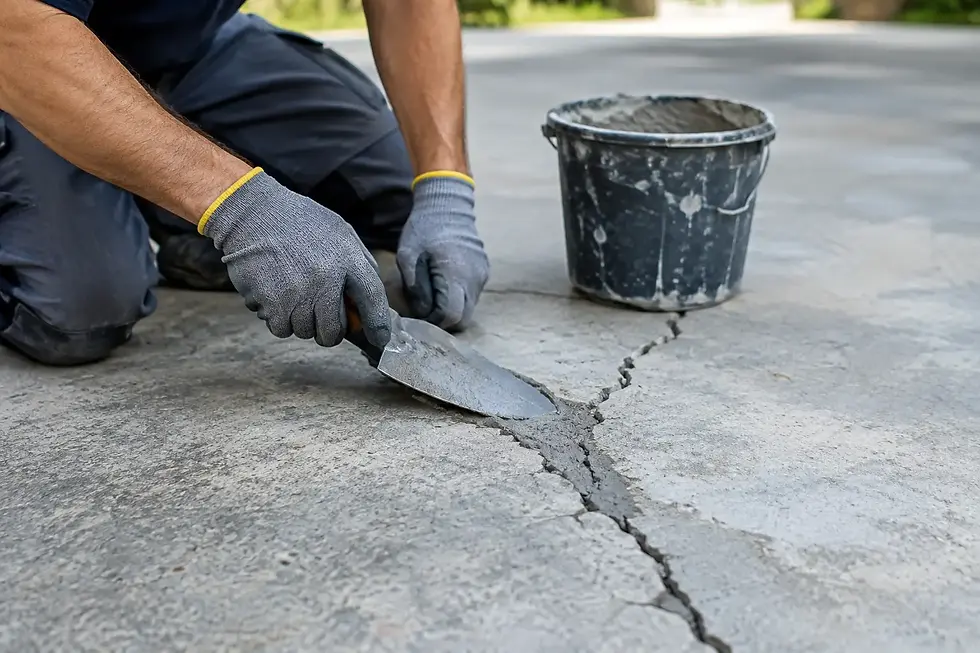
Concrete work must follow the same principle. A patio or driveway that slopes toward the house can direct substantial runoff against the foundation. Correcting this may involve regrading adjacent soil, installing a channel drain, adjusting a transition, or replacing sections of concrete where the existing slope cannot be made reliable. For new work, drainage should be planned before forms are set, not treated as an afterthought once the concrete has cured.
When surface grading is not enough
Some drainage issues require more than reshaping the top layer of soil. If water enters a basement or crawlspace despite a positive grade, if there are recurring wet areas beside below-grade walls, or if a hillside sends runoff toward the structure, a more complete drainage assessment is warranted.
Depending on the site, the solution may include foundation drainage repair, perimeter drain upgrades, window well drainage, swales, catch basins, retaining walls, or custom-engineered drainage systems. These measures work best when coordinated with the grading plan. A perimeter drain cannot perform as intended if roof water and surface runoff continue to collect directly above it.
Complex conditions should also be handled carefully around older homes. Excavation beside a foundation, aggressive regrading, and changes to retaining structures can affect soil support and site stability. This is not work to guess at, particularly where access is limited or the property sits on a slope.
A disciplined approach protects the property
Effective drainage correction starts with a clear scope: identify the source of water, establish target elevations, plan the discharge route, and account for every exterior feature that may interrupt flow. The work should leave the site clean, the grades stable, and the finished result practical for the way the property is used.
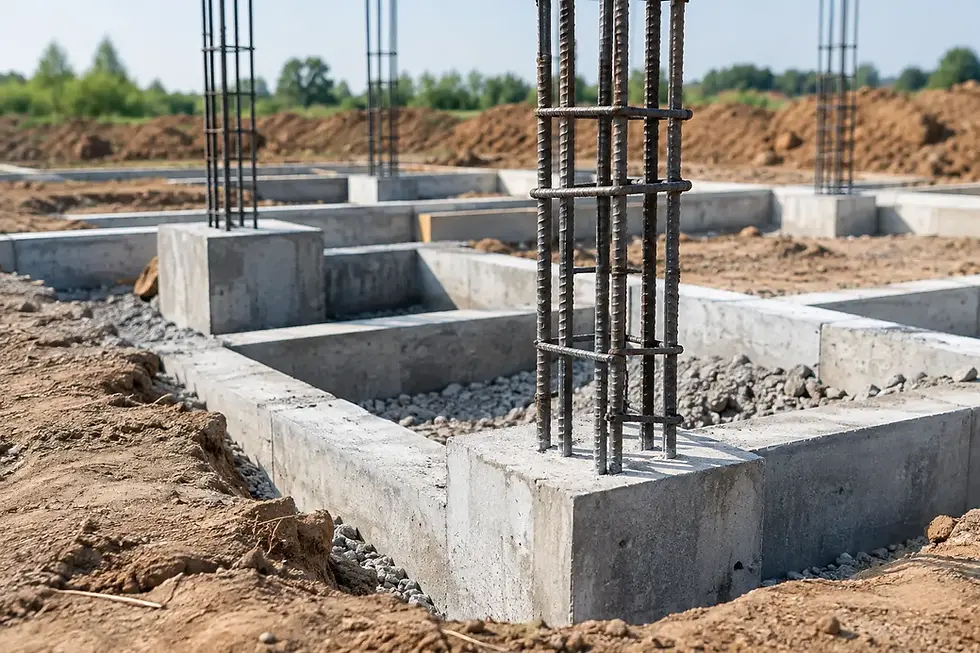
Rize Construction Ltd. approaches foundation and drainage work with that wider site perspective. Structural forming, concrete surfaces, exterior assemblies, and drainage all need to work together. A fixed project scope and transparent updates help homeowners understand what is being corrected and why, especially when the work affects landscaping, patios, access routes, or a finished outdoor space.
Before the next heavy rain exposes the low spot beside your home, take a level, a straight board, or a careful look at where water travels. A small grading correction completed properly can prevent a much larger foundation repair later.

Comments