
Best Foundation Drainage Materials That Last

A wet basement wall rarely starts with a dramatic flood. More often, it begins with damp soil sitting against the foundation, a slow buildup of hydrostatic pressure, and water finding the smallest weak point in a wall, joint, or slab edge. The best foundation drainage materials work as a complete system to move that water away before it can challenge foundation integrity.
For homes, custom builds, and commercial foundations in the North Okanagan, drainage material selection needs to reflect the actual site. A level lot with sandy native soil is not managed the same way as a hillside excavation with clay, fractured rock, spring runoff, and concentrated roof drainage. The goal is not to install the most products. It is to install compatible materials correctly, with proper grade, protection, and a reliable discharge path.
What a Foundation Drainage System Must Do
A foundation drainage system has three jobs: collect groundwater at the footing, keep soil fines from clogging the system, and carry water to a suitable outlet. If one part is missing, even quality materials can underperform.
Drainage is particularly critical where backfilled soil holds water longer than the undisturbed ground around it. Rain, snowmelt, irrigation, and surface runoff can migrate down through the backfill and settle at the footing. Without a clear path out, that water can build pressure against below-grade walls and increase the risk of seepage, staining, frost-related movement, and damage to finished spaces.
A well-built system also needs to remain serviceable. Pipe that is buried without cleanouts, or covered with fine soil that migrates into the gravel, may perform well initially but become difficult to maintain later. Long-term results come from sound structural forming and disciplined drainage installation working together.
Best Foundation Drainage Materials for Each Layer
There is no single material that solves every drainage problem. Each component has a specific role, and the materials need to be selected as a system rather than as separate purchases.
Washed Drain Rock
Washed, clean angular drain rock is the working medium around the footing drain. Its open spaces allow water to move quickly toward the pipe instead of becoming trapped against the foundation wall. A commonly used size is 3/4-inch clear crushed rock, though the appropriate aggregate can vary by design requirements and local availability.
The word “washed” matters. Material containing excess fines can compact and restrict water flow. Over time, fines can also enter the pipe and reduce its capacity. Round pea gravel can drain, but angular crushed rock generally locks together more predictably and provides dependable void space when installed correctly.
Drain rock should surround and cover the drainage pipe, not simply sit beside it. The required depth and width should follow the project design and applicable local requirements. On a complicated hillside or deep foundation, the drainage layout may need custom engineering rather than a one-size-fits-all trench detail.
Perforated Drain Pipe
Perforated rigid PVC or HDPE drainage pipe is usually the most dependable choice for foundation footing drains. Rigid pipe holds its grade well, resists crushing, and allows a contractor to confirm that the line has a consistent fall toward its outlet. Smooth interior walls also make the line easier to inspect or flush when cleanouts are installed.
Flexible corrugated pipe can have a place in certain landscape drainage applications, but it is often a weaker choice at the footing. It can sag if bedding is not carefully controlled, and its corrugations can hold sediment. For a foundation system that will be buried for decades, rigid pipe and properly formed connections are typically worth the added upfront cost.
Pipe diameter depends on the drainage design, runoff volume, and length of the run. Larger or more complex sites may require increased capacity, multiple collection points, or separate systems for footing drains and surface water. A drain pipe is only effective if it has a real destination, whether that is a daylight outlet, approved storm connection, dry well, or engineered dispersion area.
Nonwoven Filter Fabric
Nonwoven geotextile fabric separates the drain rock from surrounding soil. It lets water pass through while limiting the migration of fine silt and clay into the aggregate. This is especially valuable in sites with fine-grained soils, where untreated backfill can gradually clog the stone layer.
Fabric should be durable enough for burial and installed without large gaps that allow soil to enter the rock. It is not a substitute for clean aggregate or proper pipe grade. Think of it as protection for the drainage zone, not the drainage zone itself.
The exact placement depends on the detail. In many applications, fabric lines the excavation or wraps the stone envelope. The installer must avoid wrapping it so tightly or using a fabric type that restricts flow. Material selection should account for native soil conditions and the project’s drainage design.
Waterproofing or Dampproofing Membrane
Drainage reduces water pressure, but a foundation wall still needs an exterior moisture-protection layer. Dampproofing is commonly used where the primary concern is soil moisture. Waterproofing membranes offer a higher level of protection where water exposure, finished basements, retained soil, or challenging groundwater conditions demand it.
Fluid-applied coatings, sheet membranes, and spray-applied waterproofing products each have different preparation and installation requirements. The concrete surface must be properly cured, clean, and free of defects that can compromise adhesion. Penetrations, wall-to-footing transitions, and joints deserve close attention because they are frequent leak paths.
A drainage board or protection board may also be appropriate over the membrane. It protects the wall coating during backfill and can create a defined drainage plane down to the footing system. This is a useful upgrade where excavated material is rocky or where the foundation wall requires added protection.
Material Choices That Depend on the Site
The best system for a new home foundation may not be the right approach for a drainage correction around an existing house. Access, excavation depth, existing utilities, soil type, and discharge options all affect the scope.
On a sloped property, surface water control is as important as the footing drain. Swales, retaining details, downspout extensions, catch basins, and carefully graded landscaping can keep concentrated water from reaching the foundation in the first place. A footing drain should not be expected to handle every roof valley or uphill runoff path.
In cold-weather regions, outlet locations and pipe elevations also need careful planning. Water that cannot discharge freely can back up, freeze, or leave the system ineffective during the conditions when it is needed most. The pipe route, cleanout locations, and outlet protection should be established before backfilling begins.
Installation Details That Protect the Investment
Even the best foundation drainage materials will fail if the crew buries them without controlling grade or protecting the system during backfill. The pipe must be supported on stable bedding, sloped consistently, and connected with secure fittings. It should not be left resting on uneven native soil or loose construction debris.
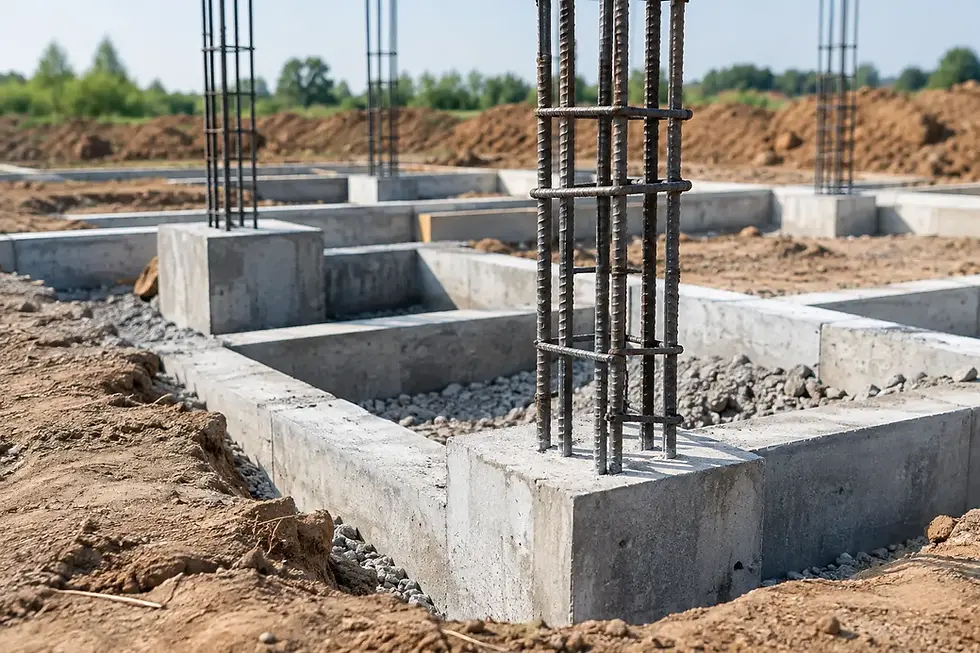
Backfill should be placed in a way that does not dislodge pipe, tear membrane, or introduce large sharp material against the wall. This is one reason experienced foundation and drainage crews coordinate the work from excavation through structural forming, waterproofing, drainage installation, and final grading. Each stage affects the next.
Cleanouts are also a practical feature, not an unnecessary add-on. Where the layout permits, accessible cleanouts allow future inspection and flushing without excavating around the house. Their value becomes clear years later if sediment, root intrusion, or an unexpected blockage needs attention.
Before the excavation is closed, confirm the outlet works, the pipe is clear, and all membrane transitions are protected. Photographs of the completed drainage system are also useful for owners and future trades, particularly when planning landscaping, additions, or utility work.
Avoid These Common Material Shortcuts
Some drainage problems are created by trying to save money in the wrong place. Avoid using unwashed gravel around footing drains, relying on thin landscape fabric not rated for buried drainage, or substituting flexible corrugated pipe for rigid foundation drain without a site-specific reason.
Another frequent mistake is directing downspouts beside the foundation and assuming the footing drain will manage the volume. Roof water should be routed away from the structure through a properly designed surface drainage plan. Similarly, a drain line that ends without an approved, functioning outlet is not a drainage solution.
For homeowners, the visible signs of trouble include persistent dampness, white mineral deposits on concrete, musty odors, pooling water near walls, and soil that remains saturated long after rain. These symptoms do not always mean the foundation drain has failed, but they justify a professional assessment before a small water issue becomes a larger repair.
Rize Construction approaches foundation drainage as part of the structure’s long-term protection, not as an afterthought before backfill. The right materials, installed with controlled grade and a clear discharge plan, help protect the work you can see inside the home by managing the water you cannot see outside it.
If you are planning a new foundation, renovating around an existing one, or correcting water movement on a sloped property, start by understanding where water enters the site and where it can safely leave. That conversation leads to a drainage scope that is practical, durable, and appropriate for the property.

Comments